Tuesday, February 6, 2007

Art as Activism, Part 2

"We are the people who run this county. We are the deciders. And every single day, every single one of us needs to step outside and take some action to stop this war. Raise hell."—Molly Ivins

Molly Ivins was given a memorial service, and her name is already passing out of the headlines. I assume she'd prefer it that way: fame was never her god, but often the victim of her knife-edged humor. And sentimentality was always repulsive to her. Those of us who love her work will remember her after the mass media and the powerful whom she regularly harried have all forgotten. Here are a few links that are worth attention to any who admired this lady's prescient political insight, humor, and relentless pursuit of truth.

  • Krugman wrote a very fine piece to Molly's memory, which deserves quotation:

    Molly never lost sight of two eternal truths: rulers lie, and the times when people are most afraid to challenge authority are also the times when it’s most important to do just that. And the fact that she remembered these truths explains something I haven’t seen pointed out in any of the tributes: her extraordinary prescience on the central political issue of our time.


  • Josh Harkinson of Mother Jones offers this piece, appropriately titled "Death of a Hellraiser".

  • And NPR has this page, which includes audio and text files of Ivins at her best.

    ___________________________

    Now, to Part 2 of Terry McKenna's piece about activism, art, and Iraq.

    So… what story will art hope to tell us about Iraq? By art, I’m including both works now considered “serious” or high art, and popular works; thus movies (even TV like Saturday Night Live and the Daily Show) but also Shakespeare and George Bernard Shaw.

    First, some background: The following three works demonstrate the change in meaning that occurs as time removes the original audience and replaces it with new viewers. The artist who produced the first two works lived in mid 16th century Flanders. He produced a number of politically sensitive drawings and asked his wife to destroy them upon his death.. The artist, Peter Bruegel, is one whose works I admire more than almost all other western painters. Even so, some of what his contemporaries saw is missing for me.


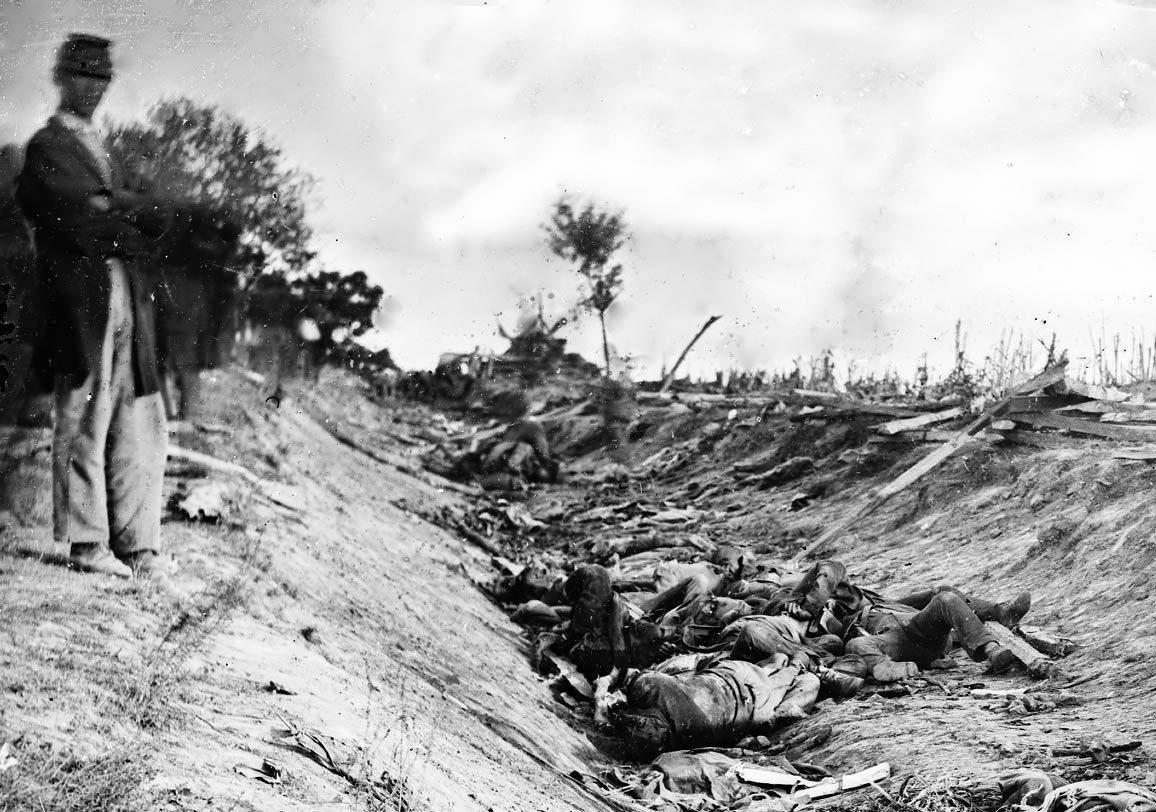
    Contrast both with the following photograph. It’s well known, but from a technical standpoint, perhaps no better made than hundreds of equally contemporary images. But in terms of the story it tells – and my ability to grasp the story, it stands out as a remarkable image.


    It took almost two decades for the US to begin to write the story of the Viet Nam War. Hopefully we won’t wait as long to deal with our present tragedy.


    Let's imagine it as a drama: It could very well begin with a secret conspiracy between the president and his close advisors (including a Darth Vader like Dick Cheney). They might be seen hatching a plan to mislead Congress into giving the president authority to go to war. The public pretense is that by threatening war, the US will force Saddam Hussein to agree to allow weapons inspections. But it turns out the inspections are also just a gambit; the president and his men want to go to war regardless, so when the inspectors are about to reveal the absence of WMD’s – the president tells the inspectors to back off, and he goes to war anyway.

    Act one would probably include the aerial bombing campaign and end with the capture of Baghdad.

    Most plays are three act affairs, though the Iraq war may surely deserve something on the scale of Wagner – or Homer. Still in a standard play, the middle act (Act 2) could start after the president’s Mission Accomplished speech. In such a play, I’d end Act 2 with the destruction the Al-Askari Mosque.

    If you were looking for a traditional heroic ending, you could conclude Act 3 with last Fall’s Democratic victory. On the other hand, if you wanted an existential drama, surely there are facts enough to create a plot line as troubling as Camus’ The Stranger.

    —T. McKenna

    ________________

    Tomorrow, for Geek Wednesday, we'll have more Webby Award nominees featured, along with more on Ubutnu Linux and my latest tangle with IE 7 and a report on its injured master, Uncle Bill. So geek out with us tomorrow here at Daily rEv.

  • Monday, February 5, 2007

    Monday with McKenna: Art as Activism


    As we noted in our week-ahead piece Saturday, the President is now calling for his puppet Maliki to show some spine or suffer the consequences. What consequences? The only consequences Maliki is probably worried about would come not from America but from his controller Mr. Al-Sadr, for if you show some spine to that guy, it's likely to be severed.

    The fact is, Bush has not only run out of political and geopolitical capital; he's now as deeply in debt on that score as he's put the US Treasury over the past 6 years. So if you're looking for someone to show some spine, it's time to demand it from your new blue Congress. But as the Peace Team is pointing out, Reid and the Dems are already wavering. I recommend you use that link to remind them what you voted for last November.

    Now onto Monday with McKenna, for the start of a detailed look at what art can do to further awaken the citizenry of our benighted nation.

    ____________________

    Art as Activism, Part 1: History's Lessons

    With the War in Iraq a complete disaster, perhaps it’s time to consider Iraq in a completely different way – as fodder for future artworks. For as the saying goes, if you’ve got lemons, might as well make lemonade.

    But does art still matter? Yes, at least art that reaches the mainstream. So called high art is another matter – current “serious” art has been consigned to the ivory tower of the modern university. Its relevance to contemporary life is unclear.

    Popular art still has the capacity to shape the popular will. In the era before WW1, young men’s hearts were stirred in favor of patriotism by poems and prose that glorified war’s majestic violence; as a result, when WW1 broke out, large numbers of earnest young men eagerly joined the slaughter. In the aftermath of the carnage, the popular images of war turned from heroic fantasies to realistic notions of horrific and pointless violence. Post WW1 art reflected the darker mood, thus Remarque’s novel, All Quiet on the Western Front (also an early popular sound movie). Post war German painters developed a particularly biting form of portraiture. The French in turn produced nihilistic DADA and then self absorbed Surrealism.

    So in Iraq’s wake, we’ll require an art capable of grappling with Iraq’s lessons. But almost as important is the continual need to revamp our imagery in the face of an updated present. In the world before modern technology, images were rare and precious. Now they are not. Thus, when one can Google for a picture of a man being hung (just try Google images) the ancient images of death, like the "Dying Gaul" above, may have lost their power to stir emotions. For the student of Western art, this piece has long been studied for its prescient realism. But it also once moved viewers with its depiction of a noble warrior grappling with death. That lesson is gone.

    To appreciate death today, we need images that can move the contemporary mind. This modern trend began with the art of the Civil War, as in the pictures of the dead of Antietam (here and here). Nobility has been replaced by meaninglessness, empty carnage on the scale of modern factory production. (The civil war era also produced images of glory, but these were hand-made images, and often seem stilted when viewed today; the photographs on the other hand have retained their power).

    Shakespeare’s works have been updated continually since they were first performed. Updating is central to our being able to understand them. Not all contemporary producers go as quite so far as Richard Loncraine did with his 1995 movie of Richard III (this version took place in the 1930’s with very recognizable characters) – but in nearly all productions, changes are made to accommodate modern ears. Perhaps a future production of Macbeth will replace the witches with figures based upon Hannity and Colmes. And perhaps an updated Lady Macbeth will look like Condoleezza Rice - ever attempting to scrub away her sin.

    So… what story will art hope to tell us about Iraq? Tomorrow, we'll attempt to find some answers.

    --T. McKenna

    Saturday, February 3, 2007

    The Week Ahead


    Looking ahead at the week to come at Daily rEv, we'll be examining the following stories and events:

  • The King of Flip-Flop reigns: George Bush sticks another toe into the waters of admitting that there is "global climate change," but he steadfastly refuses to do anything about it. Does this guy ever get anything right? Does shit ever smell like roses?


  • But give him credit—he's one tough-tongued mutha. He's warning his puppet government in Iraq that they'll have to start fixing things or "face the consequences." What consequences, you may ask? That's what we want to know.


  • A BBC Reporter finds that global warming is lost in the translation from science-speak to political spin. We'll see how the commitment to action on climate change varies on either side of the pond, and what we have to demand of our politicos here.


  • Uncle Bill's feelings are hurt: Apple keeps insulting me and my lousy software, and I'm not going to take it lying down anymore. Well, Bill, we've been looking at your sorry excuse for a web browser, and Apple's advertising slaps will seem like love-strokes compared to what we have for you on Geek Wednesday.


  • Therapy for Potter fans? This is the sort of thing that emboldens the enemy (thanks for the line, Dubya!). All those Potter-hating lunatics that burn the books and keep children from reading what they like. These folks will make hay over the fact that Pottermaniacs might need therapy (indeed, some might, but no more so than Bible-maniacs, that's for sure). It's bad news when fiction—either a Harry Potter novel or the Old Testament—is reified. Reading these books as poetry—that is, metaphorically—is, to my mind, far more rewarding and practical. And I think the author of the Potter novels would readily agree that we live amid a time where practical meaning is what we need from our literature and all our other arts as well.


  • So that's where we'll start the week at DR, with a message from Terry McKenna about what art has to show us about the times we live in and the challenges we face. So visit us this week, and send the link around to your friends, and even your enemies.
  • Friday, February 2, 2007

    Friday Reflection: On the Delusion of Evil


    We have a quote of the week (well, I think it's funny)—from the head of the World Wildlife Fund, a Super Bowl prediction:

    "Bears would likely win any encounter in the wild, but that's only if they could catch the colts," said WWF's president and CEO Carter Roberts. "And there's always a chance that a bear wouldn't come out of hibernation, which would cause them to forfeit any match."

    ______________________

    Friday Reflection: Evil, Spelled Backward

    The other day, in what I thought at the time was a very cleverly written piece, I declared that Dick Cheney and Don Rumsfeld are "black-hearted, soul-dead, bloodsucking evil." This, I now feel, was a woeful error on my part.

    Well, are they? If we asked their children or their wives, what answer would we get? And when we say they are evil, what power does that give them that they do not by nature have? What is the effect of such a statement?

    When I turn within and answer these questions honestly, I realize how foolish I am. For to impute evil on another is not merely inaccurate, it is impractical. It gives him power that, superadded to the power he imagines that he has, forces him completely outside the realm of humanity; it makes him into a symbol rather than a man. Presidents can be impeached; their cronies can also be forced out of office; but a symbol, an idea, can only be brought down within the individual self. When we call another evil, we descend to the same image-making that makes a tyranny work. George Bush turned Osama and al Qaeda into symbols of Evil Incarnate, and thus justified one of the more hideous and misbegotten wars of our generation.

    But it seems such a relentlessly inevitable conclusion, that these old and weak white men who are responsible for the needless death and disfigurement of hundreds of thousands of innocents, should be called Evil. Can there be any other reasonable conclusion? Yes: that they are sick—desperately ill, drained of feeling and of simple animal awareness. They are not living Satans, but merely failures, a few small and regressive steps in the evolutionary sphere. Great as their crimes may be, they are themselves just a few diseased men who need to be released from the bonds of power and given psychological treatment.

    Thus, it is time for me to clearly admit my mistake, while it is still small. Yet there is another lesson in this, I feel, which may reach beyond my own personal weakness. As this year progresses and the election season heats up, we may wish to recall this lesson.

    Be very careful how you choose your leaders: just one bad choice can be disastrous. One walking dead can open many graves. Leave the door to darkness ajar, and the light will waver. One diseased mind can spread much contagion, if it is allowed power or privilege. Anyone who tells you—no matter his party affiliation or national allegiance—that to lead is to hold power is not a leader, but an infestation.

    What must we demand of a true leader? Above all, humility. Not humility before wealth or power or an external God of vengeance; but humility before Nature and before the people.

    Another thing to seek in your leaders is clarity. This is the sense for truth that feels past the apparent and sees beyond the present. This is not the myopic vision of a corporate CEO and his five-year plan. No: clarity is the perspective that draws upon the insight of each part within the whole, and allows that synergy to become the lantern that guides the nation or the organization, rather than the distorted glare from a book of doctrine or a boardroom obsession.

    This message will, of course, go unheeded in the mass media and the various institutions that aggrandize the superficial. But today it's just us, a few individuals meeting over an online connection in a remote corner of the blogosphere. We can scratch the surface, we can gaze past the spin.

    To that end, it is my own personal practice to rely on the old Chinese oracle, the I Ching, to see what insight it may have for the moment. Here is the message I received on this very point of evil, leadership, and power:

    PREPONDERANCE OF THE SMALL. Success.
    Perseverance furthers.
    Small things may be done; great things should not be done.
    The flying bird brings the message:
    It is not well to strive upward,
    It is well to remain below.
    Great good fortune.

    Line 2: Six in the second place means:
    She passes by her ancestor
    And meets her ancestress.
    He does not reach his prince
    And meets the official.
    No blame.

    Line 4: Nine in the fourth place means:
    No blame. He meets him without passing by.
    Going brings danger. One must be on guard.
    Do not act. Be constantly persevering.


    "To strive upward" is to fall into the trap of power and the obsession with its symbols. The second line shows us how, when we run from belief to belief, from one figurehead to the next, we always fall short of what is truly a leader ("the prince") and are stuck again and again with "the official," the vapid institutional figurehead of power. Going thus, as the fourth line states, "brings danger."

    The oracle's message on this point concludes with a ringing reminder to the voter, the citizen, to each unique individual whose inner leader is alive and intact: be on your guard; do not act with the crowd; persevere within yourself to reach a broader understanding that surpasses what you are told by a group pundit or an institutional lackey.

    The true leader, both within the self and among the people, recognizes that it "is not well to strive upward, but to remain below." This is the same message that Lao Tzu offered leaders of his time, two and a half millennia past:

    Like water is the Cosmic Consciousness:
    It nourishes the depths of everything that lives.
    It flows, it settles, it abides in low places.

    Keep your home close to the earth,
    Keep your thoughts direct and simple,
    Keep judgment fair, and fluid in conflict,
    Keep your government free of power,
    And your personal affairs in harmony
    With the life of Nature.

    Drop the struggle, silence the demons,
    And your natural self will be free.


    ___________________________________

    Bet you thought I missed it, eh? Six and a half months to go, give or take a week....According to Mugglenet, it's already the top seller at B&N online and Amazon. Click the graphic to pre-order it...it's an affiliate link, which means you'll also be helping us to pay the rent with our host.

    Thursday, February 1, 2007

    A Noble Gathering in Old Milwaukee


    There's a lot to love about Amnesty International: it is an organization that is so deeply dedicated to justice, human rights, and truth, that everything it does seems to support and define its mission—including the site selection for its annual meetings.

    So while the political and economic kings and pundits of this world are lavishing themselves in the Swiss resort of Davos for the World Economic Forum, AI is planning its 2007 annual meeting in...Milwaukee. That's in Wisconsin. You know, where Hank Aaron used to hit his home runs; where the Green Bay Packers still play football. It's famous for beer, cheese, and very cold weather. Not your shi-shi convention destination, that's for damned sure. But I'm betting the selection of Milwaukee leaves a lot more cash for AI to put into what it does best—defending human rights all around the world. So do yourself and the world a favor: click that graphic and become a member.

    Now this isn't to say that nothing interesting or uplifting is happening in Davos, mind you. When Ms. Huffington's in the chalet, you know things will get lively. Check out her fiery exchange with John McCain:

    During his response, McCain equated those opposing his position with "the far left."

    "Do you consider Sam Brownback part of the far left?" I jumped in.

    The Senator flared and told me that if I'd only let him finish his answer instead of interrupting, we could have "a civil discussion."

    He then continued on about why he supports the escalation (see his speech to the AIE if you need a refresher). Along the way, he denied that he had used the phrase "the far left."


    Ah, fer fun. By the way, Ms. H: when you're done holding the piggies of the powerful to the fire, I hope you can have a look at my job application. You see, I'm sort of unemployed right now, and I might have something to contribute...All right, never mind, it was just a thought.

    ____________________

    Pass the Smucker's: our young friend Pepi in Ft. Lauderdale has turned 100 today. So the Philosopher's Stone was not destroyed after all: it appears Nicolas Flamel merely shipped it to the New World. Happy birthday, Pepi.
    ____________________

    Anyway, we have a leftover link from Geek Wednesday. C-Net has a journalist working for them—and I do mean a real journalist—named Declan McCullagh, who stands out amid Washington scribes for his willingness to perform the tasks of journalism: you know, scratching the surface, finding the truth, and laying it out clearly before his readers, plain and uncensored. Amazing. Anyway, Mr. McCullagh's feature piece for C-Net yesterday was about some new tactics adopted by the FBI in its data mining activities. Here's an excerpt; but I recommend you read the entire article, if only to restore your trust in how journalism might be (and sometimes is) practiced:

    The FBI appears to have adopted an invasive Internet surveillance technique that collects far more data on innocent Americans than previously has been disclosed.

    Instead of recording only what a particular suspect is doing, agents conducting investigations appear to be assembling the activities of thousands of Internet users at a time into massive databases, according to current and former officials. That database can subsequently be queried for names, e-mail addresses or keywords.

    Such a technique is broader and potentially more intrusive than the FBI's Carnivore surveillance system, later renamed DCS1000. It raises concerns similar to those stirred by widespread Internet monitoring that the National Security Agency is said to have done, according to documents that have surfaced in one federal lawsuit, and may stretch the bounds of what's legally permissible.


    ___________________

    Finally, something that I just saw in the Times as I was about to upload this post. America has lost one of its sanest, clearest, funniest, and most challenging voices: Molly Ivins is dead at age 62. If you've read any of her stuff, you'll never forget her. There's a memorial piece about her at Alternet, with links to her marvelous writing. Molly Ivins was speaking truth to power in the most clarion tones back when most of us were sitting in our shit. Everyone in the blogosphere in particular (yeah, you guys on the right, too) owes her a debt of gratitude, for she brought much of the feistiness, much of the cut-the-crap sanity, the mayhem of democracy, as I call it, to the world of Internet journalism. We'll all miss you, Molly, and we won't forget what you gave us.